House for sale in Narni, Umbria

Single-family detached house via Suffragio, Centro, Narni
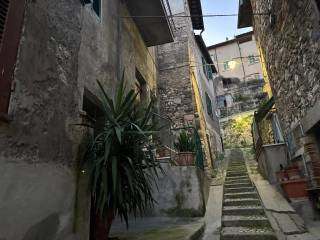
Single-family detached house via Suffragio, Centro, Narni
For Sale
Narni, IT
Narni, IT
55 m²
house
2026-04-19

Price

€39,000

€709.09 / m²

Description

In the heart of the historic center of Narni, characteristic townhouse on a single level, a few steps from the main parking lot. The property, well distributed, consists of a large living room, a kitchen, a bedroom, a bathroom and a cellar. It is possible to create a second bedroom, thus offering greater versatility to the property. The area around Narni was already inhabited in the Paleolithic, as attested by the findings in some of the caves that make up the territory. Around the beginning of the first millennium BC, populations of Apennine culture of Ideo-European origin, the Osco-Umbri, settled in the area, calling their settlement Nequinum. In 300 BC the citadel returned to the interests of Rome, which had it besieged by the consul Quinto Appuleio Pansa, obtaining however unsuccessful results given its impervious position[4]. It took over a year to accomplish the feat, which occurred in 299 BC thanks to the betrayal of two locals who allowed the Romans to enter the walls. To punish the support given to the Gauls, and considering Nequinum a bad omen (in Latin, nequeo means "I cannot", and nequitia means "uselessness"), the Romans changed the name of the city in Latin to "Narnia"[5][6][7], from the name of the nearby river Nar, the current Nera. There is not much information about that period, but it is thought[8] that the city may have had a role of some importance during the first two Punic Wars. Along the Nera river, near the hamlet of Stifone, where the port of the Roman city was located in ancient times, the archaeological site of what appears to be a Roman shipyard has recently been identified.[9]. The ancient navigability of the Nera river is also mentioned by Strabo[10] and Tacitus[11]. Strabo also mentions it among the most important centers along the Via Flaminia. It became a municipium in 90 BC, registered in the Clustumina tribe.[7] We know the passage in which the consul Gnaeus Calpurnius Piso, in 19, decided to embark in Narni with his wife Plancina in order to reach Rome without arousing suspicion. In the year 30 AD, Nerva, the Roman emperor, was born there. Tertullian's mention of Narnia in the Apologeticum, in a list of "false gods" drawn up in the first century, dates back to the early Christian era, as the city was the ancient home of the god Visidianus (Narnensium Visidianus). It is not known with certainty when the city of Narnia changed its name to Narni, but this probably happened gradually over time starting from the 13th century[unsourced] and then becoming effective after the French Revolution[unsourced], even if until the end of the 19th century inscriptions with the ancient name of Narnia[unsourced] were still found on tombstones and official writings.--d9cf6014c9c84bb6d6c1dc494ccd5aaa!

Need Broker Assistance?

Our experts are here to help you find the perfect property

Est. Monthly Payment

131.54

House for sale in Narni, Umbria - N2660411